
Schwinn is probably the best-known vintage USA bicycle company. It was founded in 1895 by German-born Ignaz Schwinn in Chicago. They declared bankruptcy in 1992 and are now owned by Pon Holdings. They are mostly a big box store brand now.
Early history
In 1895 Schwinn and Adolf Arnold founded Arnold, Schwinn & Company. Their factory was set up in Chicago and they use the latest machinery to build their bikes. Their high-quality bikes were marketed as the best in the World, and used that branding, the World Cycles. In 1908 Ignaz bought out Adolf and became the sole owner. In 1914 they were the largest bicycle maker in the world and controlled more than a quarter of the US market.

The rise of Schwinn quality
In the 1950s Schwinn decided they would only sell their brand rather than make branded bikes for the department stores. This really helped build the brand as quality above the competition. In 1962 they came out with the Sting-Ray which became an incredibly popular kids bike. The Varsity and Continental became very popular 10 speed bikes with teens and young adults.

United States v. Arnold, Schwinn & Co
In 1967 the US government charged Arnold, Schwinn & Co with violating the Sherman Act. They claimed conspiracy to restrain interstate trade and commerce through a system of distribution that involved price-fixing, allocating exclusive territories to wholesalers, and confining sales to franchised dealers. The District Court rejected the change of price-fixing but held that the territorial limitation was unlawful per se as respect to products sold by Schwinn to distributors. It was after this ruling that the company changed its name to Schwinn Bicycle Company.
Schwinn stumbles
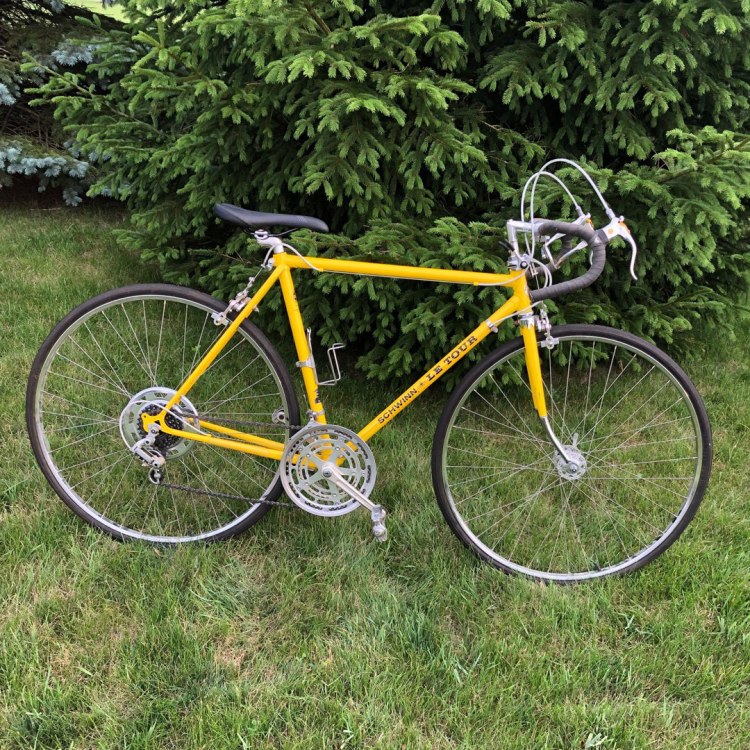
The bicycle boom of the 70s started bringing in lots of lightweight road bike competition. Raleigh and other brands from Europe had much lighter 10 speed offerings, lightweight bikes also started coming from Japan. These were bicycle shop bikes rather than department store bikes, so they went after the Schwinn customer. For the first time they begin importing lightweight road bikes from Japan themselves. First the World Traveler and World Voyager, these lead to the popular Le Tour. Now they have an affordable road bike to compete, but lots of competition has moved in.
Increasing competition
In the 80s kids had moved to BMX style bikes and wanted brands like Mongoose, Redline and Torker. So now Schwinn has lots of competition with road bikes and kid’s bikes. Brands like Trek, Specialized, and Cannondale are also starting to get popular. Mountain bikes hit the scene and other brands gain more popularity and sales.
Closing Chicago
The bike industry becomes more and more imported. Schwinn is now importing bikes from Japan and Taiwan. In 1980 the Chicago plant joined the United Auto Workers Union, and the workers went on strike for higher wages. This lasted 13 weeks and damaged the relationship between the workers and management. Between this and the plant not being updated to keep up with new bike technology, it was decided to close Chicago in 1982. They would open a plant in Mississippi to take advantage of cheaper labor.
Debt
Debt was beginning to pile up for Schwinn. Closing the Chicago plant was not cheap, and neither was opening the Mississippi plant. On top of this they had also invested heavily in a plant in Hungary that never worked out for them. Meanwhile they had lots of competition that had always imported bikes or had smaller manufacturing plants making the switch cheaper and easier to importing.
“Edward Schwinn Jr., president and chief executive, blamed Schwinn’s problems on $75 million of debt the company took on in the 1980s and said the firm could no longer afford the burden in today’s weak economy.”
Mississippi plant doesn’t workout
The Mississippi plant has lots of quality issues and never has a profitable year according to reports. It is closed in 1991.
Bankruptcy
Schwinn files for bankruptcy in 1992 and are bought by Zell, an investment group.
Sales
1968 1 million bikes sold.
1979 1.25 million bikes sold, 1,676 Schwinn dealers in the country
1988 $212.5 million highest ever
1992 $190 million, $10 million loss, 25% of sales fitness equipment
Market share
1950 – 25%
1961 – 12.8%
1978 – 11%
1980s – around 7%
Chicago
Grew to over a million square feet in the 70s
1980 Chicago – 1400 assembly workers, around 1700 employees total.
Mississippi
210 workers at time of closing. 200k units a year, 25% of Schwinn finished products.
Presidents
Ignaz Schwinn (1895-1931)
Frank W Schwinn (1931-1963)
Frank Valentine Schwinn (1963-1979)
Edward R Schwinn Jr (1979-1992)
Were the Schwinn family cyclists?
I had wondered for a long time if the Schwinn family were cyclists and finally found my answer reading an interview with Richard Schwinn. Richard states that he has ridden more miles than all the other family members combined and that’s not all that much. So, it seems Richard is the only cyclist of the family.
Overseas production
1984 80% of production overseas
Does Huffy own Schwinn?
Huffy got very close to buying Schwinn in 2001, but the deal never went through. Instead, they were bought by Pacific Cycle. The announcement that they were going to buy Schwinn was louder than the news that the deal didn’t go through so many believe Huffy owns Schwinn.
Who owns Schwinn?
The Schwinn family of course owned the company for many years. It was then sold to Zell in 1992. In 1997 it was then bought by Questor Partner Fund. In 2001 they declared bankruptcy again and were bought by Pacific Cycle. In 2004 Pacific was then bought by Dorel Industries. They became a part of Dorel Sports. In 2022 Dorel Sports was bought by Pon Holdings.
Which models are the most collectible?
Most any men’s model that is 1950s or older.
Tank bikes like the Phantom, Hornet, or Jaguar.
Paramount road bikes, the made in USA models.
Sting-Rays, especially the Krates.
Models
Autocycle – tank cruiser bike

Bantam – convertible kids bike
Collegiate – entry level road bike
Continental – entry level road bike
Continental Tourist – cruiser bike
Corvette – cruiser bike
Cruiser – cruiser bike
Debutante – ladies tank cruiser
Deluxe Cruiser – cruiser bike
Heavy-Duti – industrial use cruiser
Hollywood – ladies cruiser
Hornet -tank cruiser bike
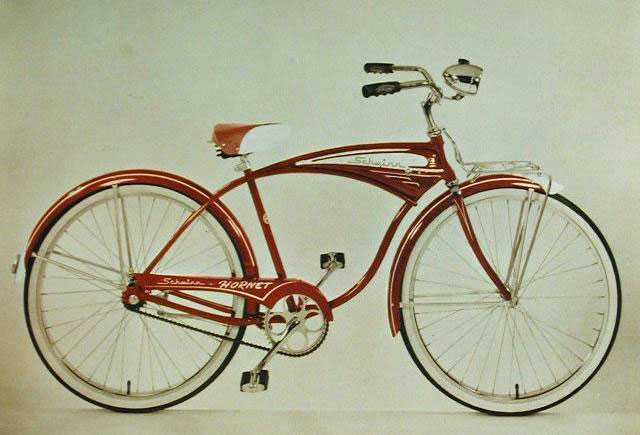
Jaguar – tank cruiser bike
King-Sting – early mountain bike
Le Tour – mid level road bike
Panther – tank cruiser bike
Paramount – iconic top of the line road bike
Phantom – tank cruiser bike
Pixie – convertible kids bike
Racer – cruiser bike

Speedster – cruiser bike
Spitfire – cruiser bike
Sprint – entry level road bike
Starlet – ladies tank cruiser
Sting – BMX bike
Suburban – cruiser bike
Super Le Tour – mid level road bike
Super Sport – entry level road bike
Superior – higher level road bike
Tiger – cruiser bike
Tornado – cruiser bike
Town and Country – tandem
Twin – tandem
Traveler – cruiser bike
Typhoon – cruiser bike
Varsity – entry level road bike

Voyageur 11.8 – touring bike
Wasp – cruiser bike
World Sport – entry level road bike
Ads
1940 Schwinn Ad

1972 Schwinn Christmas Ad

More to come soon…
Links
Schwinn Approved Le Tour Complete Guide
Schwinn Sting-Ray Guide and History
Schwinn Varsity Guide and History
List of Vintage Bicycle Manufacturers and Brands
Sources
https://www.chicagotribune.com/news/ct-xpm-1991-09-28-9103130885-story.html
https://chicagology.com/cycling/schwinn/
https://www.latimes.com/archives/la-xpm-1992-10-09-mn-727-story.html
 Frugal Average Bicyclist
I got passed down a sting ray from my brother as a kid. That thing was heavy like a tank, and I remember going over the handlebars several times after making homemade jumps in the woods. Good times😊
LikeLiked by 1 person
Fun
LikeLiked by 1 person